
Q1: This book started out as quite a different concept. Can you tell us a bit about that?
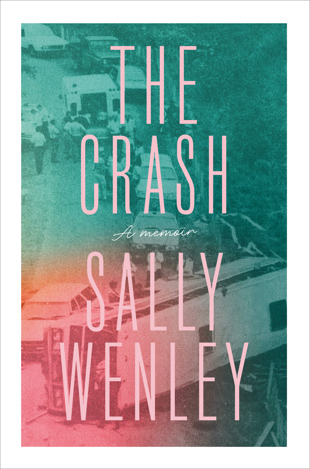
I had always wanted to know more about the crash in 1987 and its aftermath, and perhaps I was told to some extent but didn’t remember because of my brain injury. When, many years later, I fell from my wheelchair and smashed my pelvis I saw that healthcare and communication with the patient had changed a lot, for the better. The medical staff told me what was happening and what their concerns were and I was given all the results of their investigations results.
That tweaked my interest personally, and as a journalist, so I started to investigate what had happened to me back then. That led to recovering medical records, coroner’s reports and informally interviewing several people who were integrally involved at the time. The glaring difference was the way in which trauma was dealt with in 1987 compared to 2023. I felt shocked and sad for the people who were either in or associated with the bus crash but were not encouraged to work through their experiences. I believed my experience could potentially be interesting for students studying psychology, social work and qualifications that lead to a career helping those who have gone through trauma. I imagined a book that could be a resource for them, a way to help schools, societies and families speak up about the emotional toll a major accident can have on a community.
Q2: As it evolved into a memoir, you would have found yourself having to give a lot of yourself. For a journalist used to asking other people to be candid, was this a tough task?
I removed myself from a lot of the emotion as I was writing by approaching many parts of it from the perspective of a journalist researching ‘someone else’s story’. I read documents and newspaper clippings as if they weren’t about me. Some of the information I uncovered led to me having to remind myself that it was me, which at times was pretty harrowing. I also wrote about my behaviour as if I were interviewing someone else — to the point where I thought ‘this person is such an idiot to overindulge in multiple ways and put her health — mental and physical — in such risky situations.’
Q3: Books aren’t therapy sessions — or at least they are not supposed to be! — but were you surprised sometimes at what surfaced, and the way in which surfaced?
Two surprises stand out. Learning about the severity of my brain injury came as a shock. I didn’t understand a lot of the doctors’ notes I read and it sounded so awful that I thought I must have read it wrong. I sent them to a medical specialist, who confirmed and elaborated on the notes that detailed my head injury. That made me more comfortable with some of my antics and behaviour. It doesn’t legitimise my actions, but I am now more comfortable with myself and understand my extreme exhaustion, emotional outbursts, lack of empathy for others and the ‘blanks’ that I had for many years. The second surprise was such a sad one. I started looking into how it affected my school friends and what happened at school during the months following the crash. I found that rather overwhelming: there was so much grief and confusion for many students and I believe it has not been dealt with to this day. As a journalist I wanted to pursue this further and speak to more girls but I found that I just could not do it. I was already upset after peeling one person’s layer of an onion skin and I knew that if I kept going it would be too hard — for all of us. So, I backed off.
Q4: There is an overriding sense of loss in the book — the loss of the trajectory you were on before the accident in particular. As passages in the book show, you can still be overwhelmed by that. How do you manage that?
I manage it as best I can. By remembering I am fortunate to be alive and living considerably well despite my injuries. I sometimes remove myself from a situation to have several deep breaths and be thankful for the interesting life I am leading. And other times I let myself have a good old cry. My mantra is that it’s ok to re-visit, but don’t stay. I also remind myself that I am a parent and lucky to be one.
Q5: You have said that you would like this book to be read by young people who have recently found themselves in wheelchairs. What do you think they would find in its pages?
This story is not just about a spinal injury. It is about a brain injury and learning about a horrific crash trauma that shook a whole region forty years ago. In saying that I hope that young people who end up with a spinal injury and choose to read it learn that they can still lead a fulfilling and fun life, albeit from a different perspective. I would like them to see that dreams and aims can be shattered, but new successful careers are possible. And that being cheeky can help.
Q6: It really is a puzzle, isn’t it, that by the time you go back to school after being in the spinal unit the waters had all but closed over and no one was talking about the accident and the deaths. From the point of view of today can you make sense of that?
Looking back, I believe the school wanted to shelter me, and the students, as much as possible and had apparently been encouraged to not dwell on it. My heart aches for them as I have learnt that many of the girls wanted to chat to me — not necessarily about what happened or to acknowledge it, but just to chat. But they hadn’t been given opportunities to work through their own grief. When I returned to school I must have been a stark reminder of the day that many had learnt to respond to in their own way in the six months following the crash. We were all kids. I am also presuming it must have been a parallel situation for the teachers, too, as they were grieving as well. They now have chapel services and remember those who died but by the time that started the girls who were there at the time had left school.
I wouldn’t call it a puzzle — more of a sign of the times. Maybe it was the private school, ‘stiff upper lip’ mentality of the time. Their ancestors had come across from England on boats; relatives had fought in wars and showing emotions wasn’t encouraged the way it is now. From today’s point of view, it doesn’t make sense and that pleases me. I am thankful schools and large companies and organisations now have policies in place for coping with trauma and its ongoing impact on communities.
Q7: And of the fact that your parents also didn’t seem to want to talk about it?
I think they did the best they could. I was given so much support and love the only way they knew how to at the time. I can only imagine how horrific it was for them.
Q8: You were pretty angry and self destructive as a young woman, but something held you back from wrecking your life. What was that?
I think I was competing against myself and wasn’t going to lose! So I pushed myself to many limits and teetered on the edge, but then I would pull back so I could fight against myself another day. I also wanted my parents and people to see me succeed and not just be ‘the girl confined to a wheelchair’. I felt that people had very low expectations about what I would achieve and I was determined to prove everyone wrong.
Q9: You now have a new sporting life around boats and fishing. How liberating is that for you?
It’s a fun recreation that I feel I can join in and be part of the team, or compete against others on a casual basis. I always missed the team side of being younger — be it sports teams or the tramping that many of my peers did together. I don’t feel excluded when I am out fishing: we are all on boats with rods in our hands. The social side is gold for me — chatting about reels, bait and how big fish got away, or were landed. Being able to skipper my own boat is a bit of a metaphor for me. I am in control and I feel competent. Towing my daughter and her friends on skis or on an inflatable biscuit is lots of fun for us all, and rewarding for me.
My competitive nature was satisfied when I took up rifle shooting and entering competitions when I was at university. It was really liberating to be in the Massey University big and small bore shooting teams alongside able-bodied people — and to sometimes win.
Q10: Now the book is written, are you proud of it?
I am proud of it. It has been an educational and emotional journey. I hope it is read by counsellors and medical professionals so they can realise how positively life changing, and literally life saving, the work they do above and beyond what they learn during their training is for someone like me. A lot of these clever people doing long and stressful hours may get little thanks. I believe I am an example that shows their dedication is worth it. I would like school board members and principals to read it too, and then check that their policies for dealing with a potential trauma are up to date. I also hope they never need to put those policies into practice.
I am proud of myself for, these days, being more open, for asking for help when I need it and for accepting my injuries and faults. I have no one else to blame for taking so long to get to where I am in my head. I now feel more relaxed about being myself and am happy. I achieved this by writing The Crash.