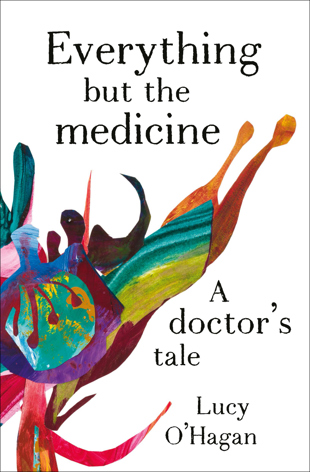
I wasn’t sure what to expect when I first started reading Everything But the Medicine by Lucy O’Hagan. Perhaps I might have been forgiven wondering what was so different about what I thought of as yet another doctor memoir. The first chapter failed to capture my attention. But after that I kept reading the book and it stayed with me throughout the week, as I led my team around ward rounds (punctuated, as always, with trips to see Mrs Brown, AKA the café), as I delivered diagnoses of both curable and incurable cancers, as I cajoled patients to come in for treatment that would make them sick before they got better, as I charted chemotherapy and blood thinners, as I quizzed patients about their ailing, failing bodies.
It made me remember to take the time to listen. It made me remember to face my patients, to look them in the eye, to ask them what was most important to them. It allowed me to forgive the poor patient who’d left 90 minutes early for her appointment, yet was still late because, well, Auckland traffic. Because it’s not all about me.
Her book tells the story of a general practitioner who went to medical school during a time, not so long ago (1983), when men far outnumbered women. O’Hagan recalls panicked comments from her male colleagues: “How can women be surgeons and have babies?”and “Doctors can’t work part time and be any good.” It was a time when doctors held all the power and patients none, when patients should be seen but not heard, such as the poor patient subjected to a testicular examination in the corridor because he had the audacity to leave his bed during the ward round.
O’Hagan lays herself bare. I admire her for that. It’s only through sharing our stories that we can help each other, ourselves, our patients. We learn about the devastating death by drowning of her brother, of her sister’s struggle with mental illness, of O’Hagan’s sudden yet hardly surprising burnout. She tells us how she was desperate to hear another burnout story and therefore she has gifted us hers — how it happened, why it happened, the windy road to recovery. O’Hagan asked her colleagues how they coped with stress during their working day. How delightful to learn that some sing (including to each other, as they complete the day’s paperwork), or have a break between consults to have a 10-minute power nap, dance to music through their headphones, or do press-ups. Perhaps my taekwondo routines between patients aren’t so weird after all.
Read the rest of the review at Newsroom here.